
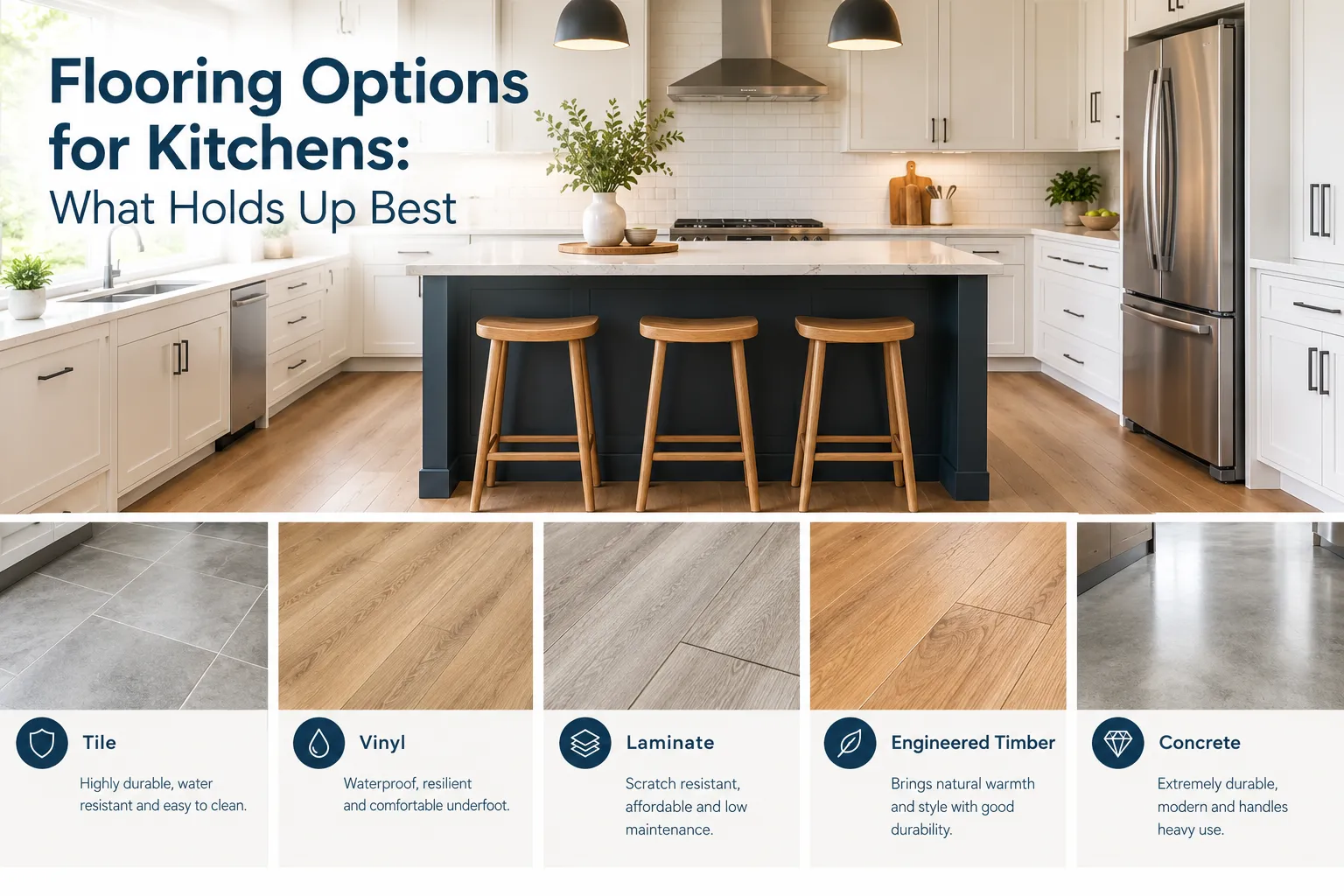
Flooring Options for Kitchens: What Holds Up Best
The kitchen floor is often the most-used area of your home. It endures dropped pans, sink splashes, muddy shoes, scraping chairs and, in many Australian households, pets racing through at dinner time. Choose the wrong material, and it can degrade significantly within a few years. Choose well, and it can last for decades and deliver a high return on investment.
As a trusted Nerang kitchen designer, we can help you determine the best flooring option for your kitchen and achieve these objectives. This will help you make informed flooring purchases that upgrade your living space and bring your dream kitchen to life.
Key Takeaways
- Good kitchen flooring should balance durability and practicality, including water resistance, scratch resistance, easy cleaning, slip resistance and underfoot comfort.
- Porcelain tiles and polished concrete offer excellent durability, while hybrid flooring provides a softer, warmer and highly practical alternative.
- Vinyl is comfortable and budget-friendly, whereas laminate is more vulnerable to water damage, particularly around sinks and dishwashers.
- Timber adds warmth and character but needs more maintenance, with engineered timber offering greater stability in Queensland’s changing conditions.
- Household needs should guide the final choice, considering pets, children, cooking habits, open-plan layouts, installation requirements and the desired finish.
What Makes a Good Kitchen Floor?
Before looking at specific materials, knowing the various factors that make a good kitchen floor enables you to choose one that aligns with your day-to-day and long-term needs. These options include:
- Water resistance: The best kitchen floors can withstand small spills and occasional dishwasher leaks.
- Scratch and dent resistance: Whether it’s dropped items or moving furniture, a good kitchen floor can endure scratches and dents.
- Ease of cleaning: Premium kitchen floors don’t require special products or constant upkeep to maintain their cleanliness and visual appeal.
- Slip resistance: Good kitchen floors offer premium slip resistance when wet to prevent accidents.
- Comfort: Since homeowners usually stand for long periods while cooking, a comfortable kitchen floor allows them to perform their tasks efficiently.
No flooring is perfect in every area, so the right choice depends on how you use your kitchen and what matters most to you.
Porcelain Tiles
For sheer toughness, porcelain tiles are hard to beat. They’re made from dense clay manufactured at very high temperatures, which makes them strong, water-resistant, and difficult to scratch or stain.
Porcelain also comes in a wide range of looks, including tiles that closely resemble timber, stone, or concrete. Large-format tiles mean fewer grout lines, which makes cleaning easier.
Keep in mind: Tiles can feel hard and cold underfoot, and anything fragile you drop is likely to break. Choose a tile with a suitable slip rating for kitchens, and pick a darker grout to hide marks.
Durability: Excellent.
Ceramic Tiles
Ceramic tiles are similar to porcelain but slightly softer and more porous. They’re usually more affordable and still perform well in most kitchens.
Keep in mind: They can chip more easily than porcelain, especially in busy households.
Durability: Very good.
Hybrid Flooring
Hybrid flooring has become a popular choice in Australian homes. Its layers include:
- Rigid core layer: This layer has a printed top which usually resembles conventional timber.
- Protective wear layer: This layer resists scratches and scuffing, protects against stains and spills, and reduces long-term fading.
Hybrid flooring is usually waterproof on the surface, handles scratches well, and feels warmer and softer underfoot than tiles. It’s also usually quicker to install, which can help reduce labour costs.
Keep in mind: Quality varies widely. Thicker wear layers last longer, so compare products carefully. Water left sitting at the edges or joins can still cause problems, so wipe spills quickly.
Durability: Very good.
Vinyl Flooring
Vinyl planks and sheets are soft, quiet, and water-resistant. They’re comfortable to stand on and generally budget-friendly, making them ideal for practical, busy homeowners.
Keep in mind: Vinyl can dent under heavy appliances or sharp furniture legs, and cheaper options can fade in strong sunlight.
Durability: Good.
Laminate Flooring
Laminate is made from compressed wood fibres with a printed image and protective top layer. It’s affordable and resists scratches reasonably well.
Keep in mind: Laminate is water-resistant, not waterproof. If water gets into the joins, the boards can swell and lift. That makes it a riskier option for kitchens, particularly near the sink and dishwasher.
Durability: Fair to good.
Timber Flooring
Timber brings warmth and character that many homeowners love. In fact, the 2023 Houzz Australia Kitchen Trends Study found that medium-toned wood was the most popular kitchen flooring colour among Australian renovators at 27%, followed by light-toned wood at 23%.
There are two main types:
- Solid timber: This flooring can be sanded and refinished several times, so it can last for generations.
- Engineered timber: This flooring has a real timber top layer over a stable base. It moves less with changes in temperature and humidity, which suits Queensland’s climate.
Keep in mind: Timber scratches and dents more easily than tiles, and standing water can damage it. Mats near the sink and cooktop help prevent long-term damage and deliver peace of mind.
Durability: Good with regular upkeep.
Polished Concrete
Polished concrete is extremely hard-wearing and suits modern and industrial-style homes. It’s easy to clean and can last as long as the house itself.
Keep in mind: It’s hard underfoot, can crack over time, and is usually only practical if you have a suitable concrete slab. Like tiles, it’s unforgiving when you drop something breakable.
Durability: Excellent.
Natural Stone
Marble, travertine, and slate make your kitchen visually appealing and can last for many years.
Keep in mind: Most natural stone needs regular sealing. Some types, particularly marble, can stain or dull when exposed to acidic spills like lemon juice or wine.
Durability: Good to very good, depending on the stone and upkeep.
Other Things to Consider
Cost is not the only factor worth considering when exploring flooring options for your kitchen. The following considerations can help you make informed decisions and receive great value for money:
- Your household. Young children, pets, and frequent entertaining all place your flooring under constant duress. Tiles and hybrid flooring tend to cope best under these conditions and deliver peace of mind.
- Comfort. If you spend a lot of time cooking, softer options like vinyl, hybrid, or timber may be easier on your feet and back.
- Indoor flow: Many open-plan homes use the same flooring through the kitchen, dining and living areas, creating a sense of space. However, the material must align with the demands of each space.
- Installation sequence. Some floors, such as tiles, often go under kitchen cabinets. Floating floors, like hybrid and laminate, usually go around them so the boards can expand and contract. Consider discussing these factors early in the planning stage to create a well-designed kitchen space.
- Finish. Matte and textured finishes hide marks better and usually offer more grip than glossy surfaces.
So, What Holds Up Best?
If durability is your top priority, we highly recommend porcelain tiles and polished concrete for your kitchen floor. Hybrid flooring is close behind and offers extra comfort and warmth. Finally, timber suits homeowners willing to prioritise regular upkeep, while laminate is best kept away from wet areas.
At Kitchen Builders Queensland, we help homeowners choose flooring that suits the way they live, not just the way the kitchen looks on day one. If you’re planning a kitchen renovation, book an appointment today to discover the options that make the most sense for your home, your family, and your budget.
Frequently Asked Questions (FAQs)
What is the most durable kitchen flooring?
Porcelain tiles are generally the most durable option. They resist water, scratches and stains, and they handle heavy foot traffic well. Polished concrete is similarly hard-wearing. Both can feel hard underfoot, so a mat near the sink or cooktop adds comfort.
Is hybrid flooring waterproof?
Most hybrid flooring is waterproof on its surface, so everyday spills aren’t a problem. However, water left sitting at the edges or joins can compromise your flooring. For this reason, wipe up spills quickly and ensure proper installation to prevent long-term water damage.
Do you recommend timber floors for the kitchen?
Many Australian kitchens have timber flooring, which brings warmth and sophistication. However, timber floors require more care and upkeep than other flooring types.
Wipe spills straight away, use mats near the sink, and expect some scratches over time. Solid timber can be sanded and refinished, helping it last for decades.
Should flooring go under kitchen cabinets?
It depends on the material. Tiles are often laid under cabinets, while floating floors like hybrid and laminate usually go around them so the boards can expand and contract. Your installer should confirm the right approach before work begins.
What kitchen flooring is best for families with pets?
Porcelain tiles and hybrid flooring are usually the best choices for families with pets. They resist scratches, spills and accidents, and they’re easy to clean. A matte or textured finish hides marks better and offers more grip for pets and people.
